
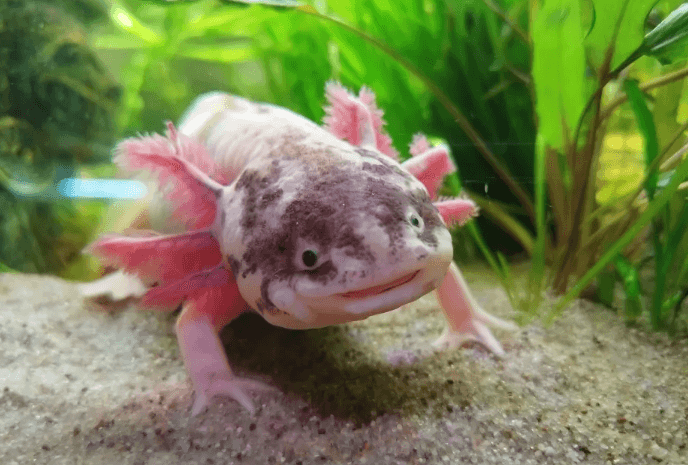
4. The Axolot
The axolotl (Ambystoma mexicanum), a critically endangered neotenic salamander native to the ancient lake complexes of Mexico City, holds unparalleled regenerative capabilities. While most vertebrates, including humans, form thick, fibrous scar tissue to quickly close deep wounds and prevent infection, the axolotl opts to completely rebuild complex biological structures from scratch. If an axolotl loses a limb, portions of its spinal cord, its jaw, or even large chunks of its brain and heart, its immune system immediately sends macrophages to the wound site to suppress severe inflammation. Following this, the surrounding cells undergo a process called dedifferentiation—essentially reverting back into embryonic-like stem cells. These cells aggregate to form a specialized mass called a blastema, which seamlessly regrows the lost anatomy perfectly. It reconnects every blood vessel, nerve ending, muscle fiber, and bone segment without leaving a single microscopic trace of scar tissue.
